BrainLab
Before I deploy this for you, I've deployed it for myself.
I got tired of recommending tools I hadn't run myself. So I built the kind of stack I'd deploy for you, on my own hardware, with my own data. Everything I recommend, I've already debugged at 2am.
BrainLab is the private AI system I built and run myself. A large open model runs there, with agents, voice and monitoring, and my memory, documents and photos are stored there too. I use it every day.
How it fits together
From question to answer
Stays on my hardware
Question
From a messaging app
Private model
A large open model on the DGX Sparks cluster
Documents
Memory
Web research
Leaves when an agent searches
A question arrives
I ask something through an everyday messaging app.
The private model takes it
The model runs on my own hardware, inside the line.
Documents and memory join in
The assistant searches my files and recalls earlier conversations. Both are stored here.
Web research crosses the line
When an agent needs the internet, the search leaves my hardware.
The answer comes back
Everything inside the line stayed there.
Email, messaging and a few opt-in tools also use external services. Details below.
Where the data goes
Stays on my hardware
Day-to-day model inference runs here, and memory, documents and photos are stored here.
Uses external services
Web research reaches the internet when an agent searches. Email and messaging use external services, and so do a few opt-in tools. The agents that help me operate the lab run on cloud coding models.
The hardware
What it runs on
The machines behind BrainLab, shown together. Drag the model, or focus it and use the arrow keys, to turn it around.
125 billion
parameters in the open model it runs, on two machines that are each 15 cm square.
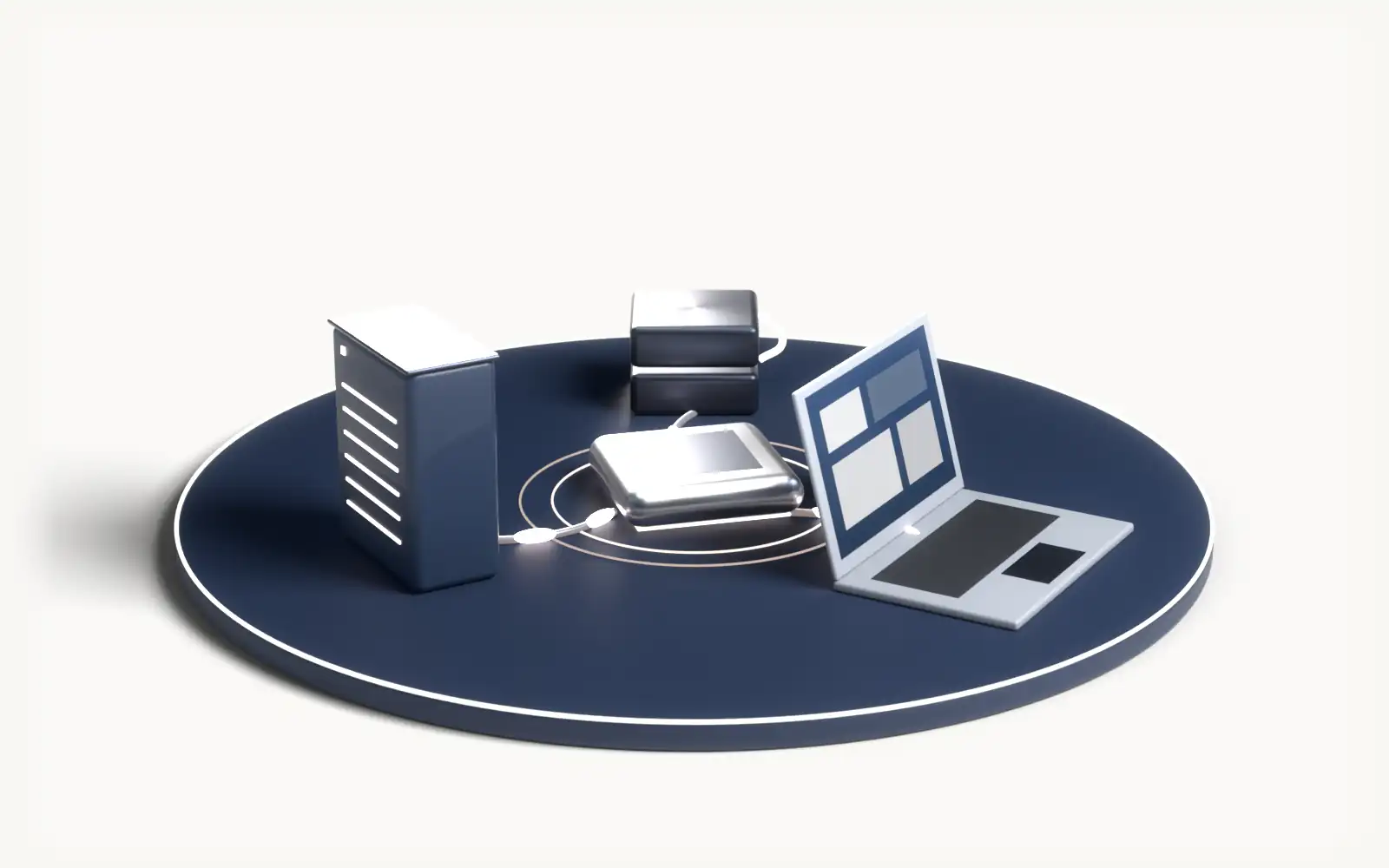
- DanteThe private assistant that ties it together
- DGX Sparks clusterTwo 15 cm machines that run a 125-billion-parameter model as one
- Vision workstationOCR, captioning and image work
- Memory and documentsLong-term memory and the document vault
Rendered model, simplified. Proportions are indicative.
The moving parts
What sits behind that journey
Dante
My private assistant, and what ties the rest together. I talk to Dante, and Dante works with the model, the memory, the documents and the agents.
DGX Sparks cluster
A two-node GPU cluster joined by a fast interconnect. The main model is split across both nodes, so the pair serves it as one.
Vision workstation
A separate machine from the DGX Sparks takes on OCR, captioning and image work.
mem0
Long-term memory for the assistant, so context carries across conversations.
Docbank
My document vault, which the assistant can search.
Private photo library
My private photo and video library, self-hosted.
What BrainLab does
A private assistant
I reach it through everyday messaging apps, by text or voice note.
Documents and memory
The assistant searches my private documents and keeps memory across conversations.
Agents
Agents handle web research, memory, image generation and document search.
Voice
I can talk to it. Speech recognition and spoken replies both run in the lab, and voice notes reach the assistant through a messaging app.
Monitoring
Dashboards, metrics, logs and alert rules cover the systems I run, so I can see how they behave over time.
Everything as code
The setup is defined in version-controlled code, and the architecture decisions are written down.
What this means for you
Advice that has been tested
I have chosen models, upgraded them and lived with the results. You hear what worked for me, including the trade-offs.
Decisions based on measurement
I compare options with paired tests and real usage. I would do the same with your workload before you commit to anything.
A system your team can run
Running this myself shows me what daily operation takes, and that experience goes into what I hand over to your team.
Want this for your organisation?
I help Danish and EU companies run private AI on their own infrastructure, whether that is one model or a full set of agents.